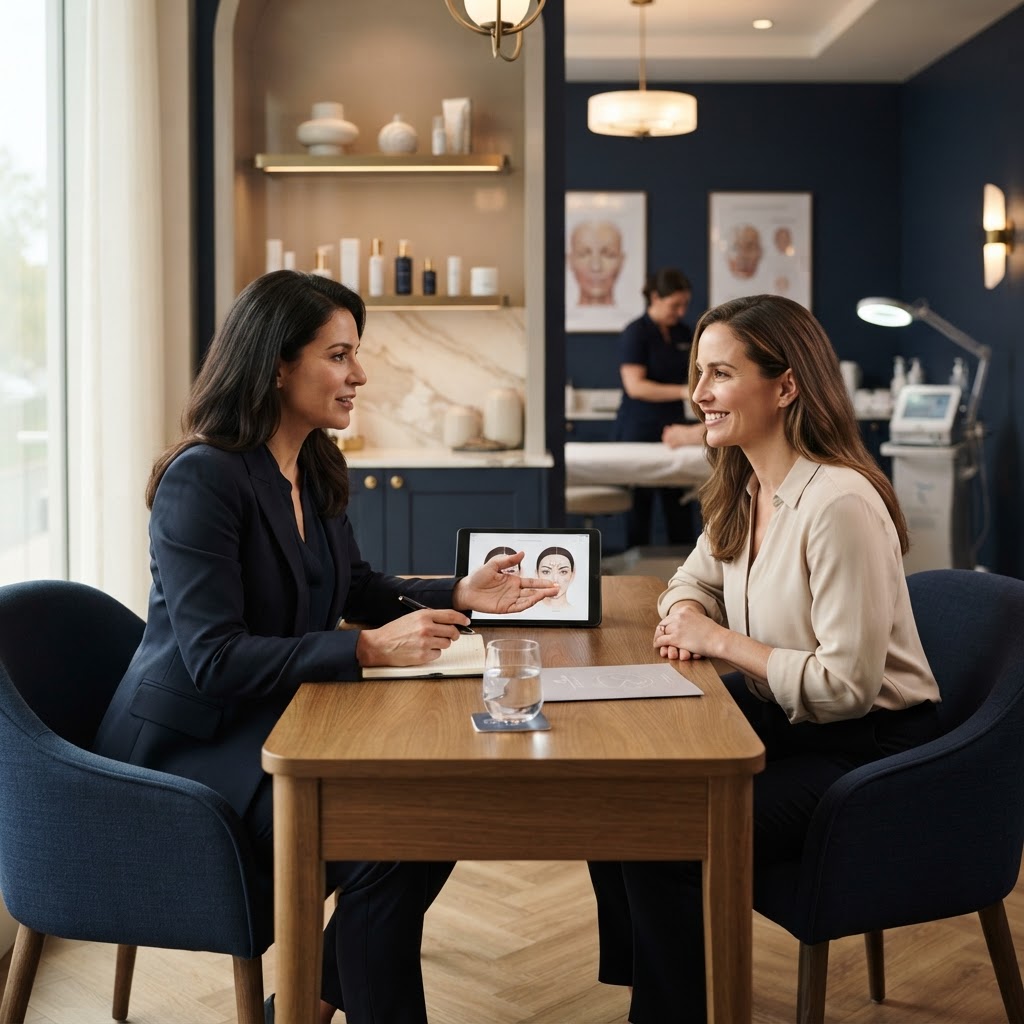
How to Build Trust During an Aesthetic Consultation
Trust is the foundation of every successful aesthetic consultation. Learn how medspa teams can create confidence through listening, education, transparency, and ethical sales communication.

Trust is the deciding factor in many aesthetic consultations. Patients are often excited about potential results, but they may also feel vulnerable, cautious, or unsure about where to begin. When your team knows how to build trust aesthetic consultation conversations become more productive, more ethical, and more aligned with long-term patient relationships.
In the medspa industry, trust is not created by polished scripts alone. It is built through presence, preparation, transparency, and the ability to guide patients without pressure. A strong consultation helps patients feel understood, respected, and informed enough to make decisions with confidence.
Why Trust Matters in Aesthetic Consultations
Aesthetic services are personal. Patients are not only evaluating treatments, they are evaluating your professionalism, your judgment, and whether your recommendations genuinely serve their goals. If trust is missing, even the most well-designed treatment plan can feel uncomfortable or rushed.
Trust matters because it shapes three critical outcomes:
Patient confidence
When patients feel safe and respected, they are more likely to ask honest questions, share relevant concerns, and participate in a meaningful consultation. This creates better communication and fewer misunderstandings.
Ethical treatment plan acceptance
Patients should never feel sold to. A trust-based consultation creates space for thoughtful decisions, clear expectations, and recommendations that make sense for the individual, not just the practice.
Long-term loyalty and referrals
Patients remember how they were treated. A consultation that feels attentive and professional often leads to repeat visits, stronger retention, and positive word of mouth. Teams that want sustainable growth should treat trust as a business skill, not just a soft skill.
If your practice is focused on elevating the patient experience, resources on the Aesthetic Sales Institute homepage and educational articles on the blog can support that work.
Start With Preparation and Presence
Trust often begins before a recommendation is ever made. The first few minutes of a consultation influence whether a patient feels at ease or guarded.
Create a calm, professional environment
A consultation room should feel organized, private, and intentional. Visual clutter, interruptions, or rushed transitions can undermine confidence. Small details matter, including eye contact, a warm greeting, and a clear explanation of what the appointment will cover.
Instead of launching straight into treatments, set the tone with a simple framework: what you will discuss, how long the consultation will take, and what the patient can expect at the end.
Be fully present
Patients notice when attention is divided. Looking at a screen while they speak, interrupting their story, or moving too quickly into pricing can make the interaction feel transactional. Being present means listening closely, observing nonverbal cues, and letting the patient feel that this conversation is about them.
Match professionalism with warmth
Premium service does not mean being distant. The most effective consultants combine polished communication with genuine empathy. Patients should feel that they are in capable hands, but also that their preferences and comfort level matter.
Listen Before You Recommend
One of the fastest ways to lose trust is to recommend a treatment before fully understanding the person in front of you. Trust grows when patients feel heard before they feel advised.
Ask discovery questions that uncover motivation
Surface-level questions often produce surface-level answers. Instead of only asking what treatment a patient wants, explore what is driving their interest. For example:
- What brings you in today?
- What changes have you been thinking about?
- What would a successful outcome look like for you?
- Have you had aesthetic treatments before?
- Is there anything you are concerned about during this process?
These questions help uncover expectations, timelines, comfort level, and past experiences. They also signal respect.
Reflect and confirm understanding
Before discussing options, summarize what you heard. This step is simple, but powerful. It shows that you listened and gives the patient a chance to clarify.
For example: “It sounds like your main priority is looking more refreshed, but you want a plan that feels natural and fits your schedule. Is that right?”
This kind of reflection builds alignment and reduces the risk of recommending something that feels off target.
Pay attention to emotional cues
Some patients are highly informed. Others are nervous or hesitant. Some want detailed explanations, while others want a simpler overview. Trust improves when your communication style adapts to the patient rather than forcing every patient through the same script.
Educate With Clarity and Transparency
Once you understand the patient, your role is to guide with clarity. Education is one of the strongest trust-building tools in any consultation.
Explain options, not just one answer
Patients often feel more comfortable when they understand the range of appropriate options. If there are multiple ways to approach a concern, explain them in a balanced way. Clarify how each option differs in terms of purpose, maintenance, expected timeline, and investment.
This approach demonstrates expertise without creating pressure. It also helps patients feel included in the decision-making process.
Set realistic expectations
Trust is damaged when outcomes are oversimplified. Ethical consultants discuss what a treatment may help with, what it may not address, and what kind of commitment could be required over time. Clear communication around timing, maintenance, and variability supports informed decision-making.
The goal is not to reduce enthusiasm. The goal is to create confidence rooted in realism.
Be transparent about pricing and next steps
Few things erode trust faster than vague pricing or surprise costs. Present fees clearly, explain what is included, and review any follow-up considerations in a professional manner. Patients do not need a hard sell, they need straightforward information.
For more consultation and patient communication insights, explore the latest training articles.
Use Ethical Sales Skills to Support Decision-Making
Aesthetic consultations involve sales, but in a premium practice, sales should feel like guidance, not persuasion. Ethical sales communication helps patients move forward only when they are ready and when the recommendation fits.
Recommend based on goals, not quotas
Patients can often sense when a recommendation is financially motivated. Trust grows when your plan clearly connects to their stated goals and priorities. If a patient is not a strong fit for a service, the most professional response is to say so.
That kind of honesty often increases credibility.
Invite questions and slow the pace
Confident patients ask better questions. After presenting options, pause. Ask what feels clear, what feels uncertain, and what additional information would help. This keeps the consultation collaborative and reduces the chance of a patient agreeing before they truly understand.
Confirm readiness without pressure
A patient-centered close might sound like this: “Based on your goals, this would be a reasonable next step. If you feel comfortable, we can review scheduling and timing. If you would prefer time to think it over, that is completely fine too.”
This language protects trust while still providing direction.
Practical Examples From Common Consultation Moments
Trust-building becomes easier when teams know what it looks like in everyday situations.
Example 1, the patient who arrives skeptical
A patient says they have been to another medspa and felt rushed. Instead of defending your process, acknowledge their concern and explain how your consultation works. This validates their experience and differentiates your practice through professionalism.
Example 2, the patient who asks for a specific treatment
A patient requests one treatment by name, but their goals suggest another approach may be more appropriate. Rather than immediately agreeing, ask what they hope to improve. Then explain how different options align with that goal. Patients trust teams who educate before they execute.
Example 3, the patient focused on price
If a patient is cost-conscious, avoid sounding dismissive or overly promotional. Clarify priorities, discuss phased planning if appropriate, and help them understand where to start. Respectful budget conversations can strengthen trust when handled with transparency.
Common Mistakes That Undermine Trust
Even experienced teams can unintentionally create friction during consultations. Watch for these common issues:
Talking too much, too soon
Overexplaining before understanding the patient can make the interaction feel scripted.
Using pressure-based language
Urgency tactics, guilt, or overly aggressive closing language can damage credibility quickly.
Focusing on features instead of outcomes
Patients care less about technical language and more about whether you understand their goals.
Avoiding difficult conversations
When limitations, maintenance, or pricing are minimized, patients may feel misled later.
Inconsistent team communication
Trust can weaken when the front desk, coordinator, provider, and consultant all communicate differently. Alignment across the team is essential.
Action Steps for Your Team
Building trust is not a one-time tactic. It is a repeatable consultation discipline. Here are practical steps your team can implement right away:
Standardize your consultation flow
Create a consistent structure that includes rapport, discovery questions, education, pricing review, and next steps.
Train active listening skills
Role-play consultations where team members practice summarizing, reflecting, and clarifying patient goals before making recommendations.
Audit your language
Review scripts and replace any phrasing that feels pushy, vague, or overly promotional with language that is clear, calm, and collaborative.
Improve handoffs between team members
Make sure each person involved in the patient journey communicates with consistency and professionalism.
Measure trust indicators
Look beyond immediate conversions. Track consultation quality through retention, rebooking, reviews, and patient feedback about how informed and respected they felt.
Build a Consultation Process Patients Can Trust
In aesthetic medicine, trust is not built through charisma alone. It is built through preparation, listening, transparency, and ethical guidance. When medspa teams approach consultations with professionalism and empathy, they create a better patient experience and a stronger foundation for long-term growth.
If you want to elevate how your team communicates, recommends, and closes with integrity, join the Aesthetic Sales Institute prelaunch list and get 20% off at launch. Visit the homepage to learn more and stay connected for new training resources.