What Is Aesthetic Sales Training?
Aesthetic sales training helps medspa teams communicate value, guide consultations, and present treatment plans with professionalism and ethics. Done well, it supports stronger patient experiences and more consistent business performance.

In medical aesthetics, growth rarely comes from pressure or scripts alone. It comes from clear communication, consistent consultation skills, and a patient experience that feels informed, respectful, and aligned with the practice's standards. That is where aesthetic sales training plays an important role.
At its best, aesthetic sales training teaches medspa teams how to lead better conversations, present treatment recommendations clearly, and help patients make confident decisions without feeling pushed. It combines service, psychology, communication, and process improvement into a structured approach that supports both the patient journey and the business side of an aesthetic practice.
For teams exploring a more elevated approach to performance, the Aesthetic Sales Institute exists to help professionals build these skills in a way that fits the realities of modern medspa growth.
Why Aesthetic Sales Training Matters
Aesthetic practices operate in a unique environment. Patients are often making discretionary purchases, comparing providers online, and weighing emotion alongside budget, trust, and timing. A consultation is not just a sales moment. It is a decision-making moment.
Without training, many teams rely on instinct. One coordinator may be naturally warm but inconsistent. One provider may explain treatments well but struggle to connect recommendations to patient goals. Another team member may avoid discussing price altogether, which creates confusion and unnecessary hesitation.
A structured training process helps solve this by creating a shared standard for how the team communicates. It can help practices:
- improve consultation consistency
- reduce missed opportunities caused by poor follow-up
- strengthen confidence when presenting treatment plans
- support ethical, patient-centered communication
- create a more premium and organized patient experience
In a competitive market, the difference between an average consultation and an excellent one can influence conversion, retention, referrals, and brand perception.
What Aesthetic Sales Training Actually Means
Aesthetic sales training is the professional development process that teaches medspa and aesthetic teams how to guide patient conversations from inquiry to decision with clarity, trust, and structure.
It is not about high-pressure selling. It is not about manipulating objections. And it is not limited to one role.
Instead, it teaches team members how to:
- ask better questions
- identify patient motivations and priorities
- explain treatment options in understandable language
- communicate value without overselling
- navigate pricing conversations professionally
- recommend next steps with confidence
- follow up in a timely and polished manner
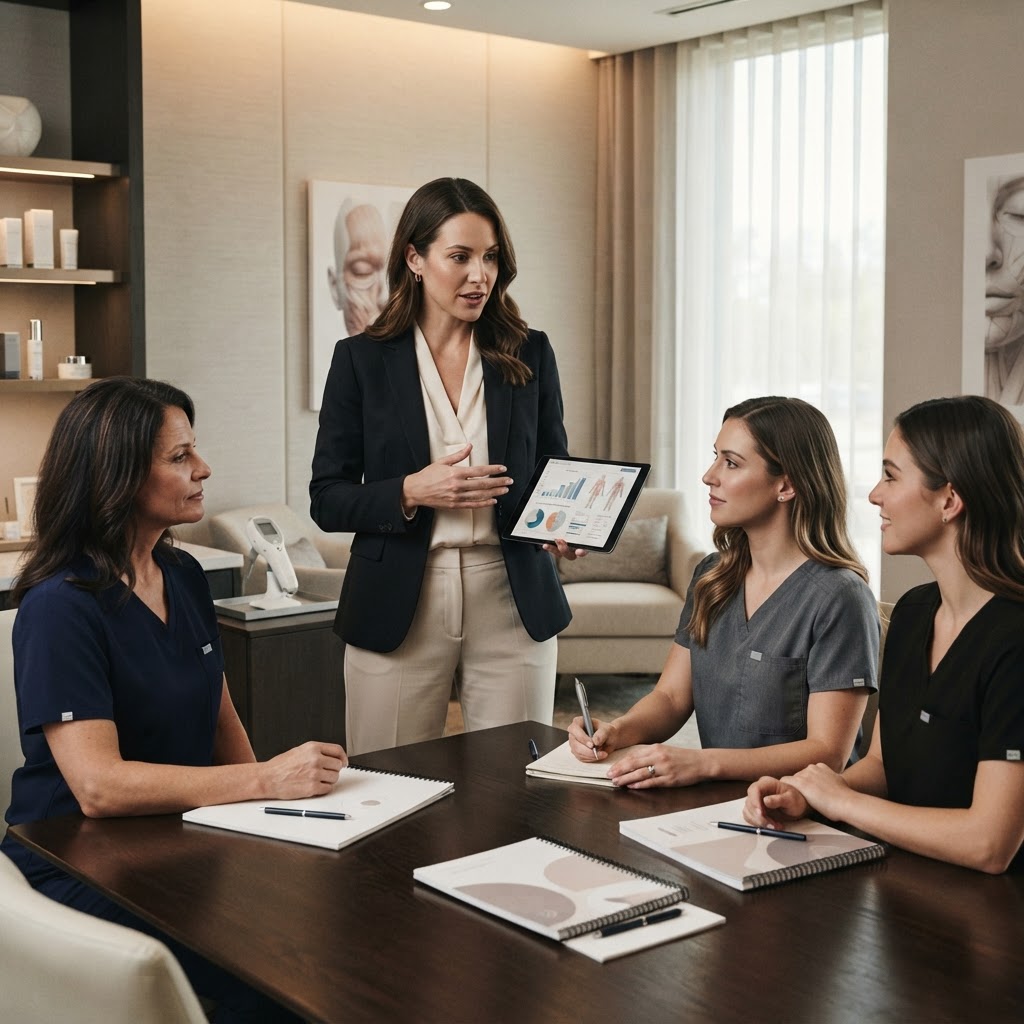
This training can apply to patient coordinators, front desk teams, consultants, providers, and practice leaders. In many medspas, results improve most when the entire patient-facing team learns a common framework.
The core goal
The goal of aesthetic sales training is simple: help patients feel informed and supported while helping the practice communicate its value more effectively.
That balance matters. When teams focus only on closing, patients may feel pressured. When teams avoid sales entirely, patients may leave uncertain, confused, or uncommitted. Effective training helps teams operate in the middle, where education and business performance can work together.
What Strong Aesthetic Sales Training Should Cover
Not all training is equally relevant to the medspa environment. Strong programs are tailored to aesthetic consultations and the real dynamics of elective treatment decisions.
Consultation structure
One of the most important elements is a clear consultation framework. Team members should know how to move through a conversation in a way that feels natural but intentional.
This often includes:
- building rapport
- understanding the patient's goals
- clarifying concerns and expectations
- presenting suitable options
- discussing investment and timing
- confirming next steps
A defined structure creates consistency. It also helps new team members onboard faster and gives experienced professionals a stronger process to refine.
Communication and listening skills
The best consultants do more than talk. They listen carefully, reflect back what they hear, and ask questions that uncover priorities.
For example, a patient asking about lip filler may really be seeking better facial balance before an event. Another asking about skin treatments may be motivated by long-term confidence rather than a single appointment. Training helps professionals hear the difference.
It also improves the language teams use. Instead of relying on generic phrases, they learn how to explain benefits, timelines, and treatment plans in a way that is professional and easy to understand.
Ethical treatment plan presentation
In aesthetics, ethics matter. Patients should never feel rushed into treatment or pushed beyond their comfort level. A high-quality training program teaches teams how to present recommendations responsibly.
That means learning how to:
- align recommendations with stated goals
- avoid fear-based language
- respect budget boundaries
- be transparent about options
- support informed decision-making
This is a major reason why aesthetic sales training is so valuable in premium practices. It helps teams grow while protecting the trust that supports long-term relationships.
Follow-up and retention systems
Many consultations do not convert on the spot. That does not mean the opportunity is lost. Often, the issue is timing, budget, or the need for more consideration.
Training should cover how to follow up professionally, when to reconnect, and what kind of messaging maintains momentum without feeling intrusive. It should also address retention, rebooking, memberships, and long-term patient value.
Practices that want deeper support can explore training resources and education focused on consultation strategy, patient communication, and medspa team development.
What Skills Teams Develop Through Training
Aesthetic sales training is not just about knowing what to say. It builds a more complete professional skill set.
Confidence in pricing conversations
Many aesthetic professionals feel comfortable discussing treatments but uncomfortable discussing cost. That hesitation can create awkward pauses or mixed messaging.
Training helps teams explain pricing clearly, connect cost to value, and present options with confidence. Patients do not always expect the lowest price. They often want clarity, professionalism, and trust.
Better handling of hesitation
Patient hesitation is normal. It does not always signal disinterest. Sometimes it means the patient needs more information, more time, or a clearer understanding of priorities.
Effective training teaches teams to explore hesitation with curiosity instead of defensiveness. Rather than pushing harder, they learn to ask thoughtful questions and clarify what is standing in the way.
More consistent luxury experience
Premium medspas do not create a luxury impression through design alone. The consultation process contributes heavily to how the brand is perceived.
When every team member communicates with polish, empathy, and consistency, the patient experience feels more elevated. This is one reason many practices look to ongoing medspa education as part of their brand and revenue strategy.
Practical Examples in a Medspa Setting
To understand aesthetic sales training more clearly, it helps to see how it shows up in everyday practice.
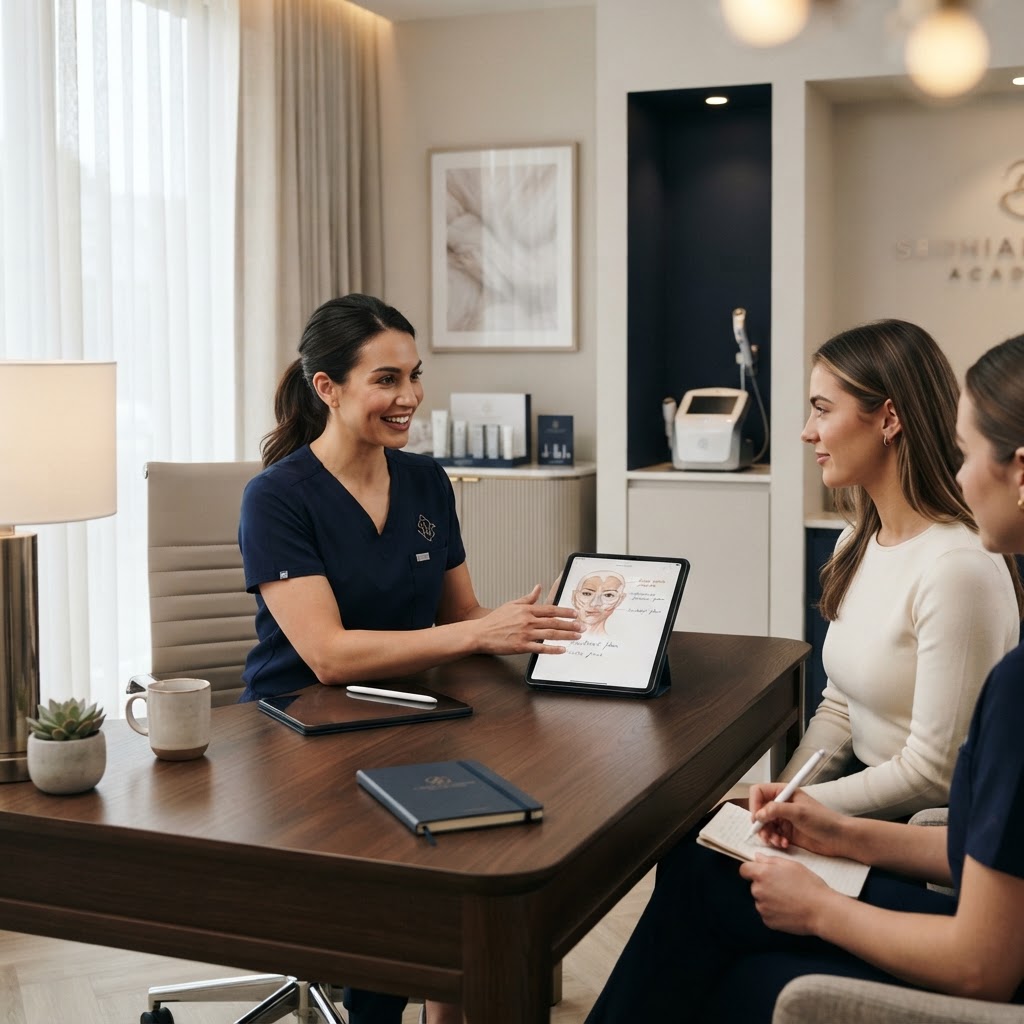
Example 1: The new patient consultation
A new patient books a consultation for facial rejuvenation. Without a structured process, the conversation may stay broad and end with vague recommendations.
With training, the consultant or provider asks specific questions about goals, timeline, past treatments, and priorities. The patient receives a clear plan, a confident explanation of options, and a next step that feels easy to follow.
Example 2: The patient who hesitates at price
A patient loves the recommendation but pauses when investment is discussed. An untrained team member may immediately discount or become apologetic.
A trained professional is more likely to explore what the hesitation means. Is it the total plan? The timing? The need to phase treatment over several visits? That conversation often leads to a more workable and ethical solution.
Example 3: The missed follow-up opportunity
A patient leaves without booking. In many practices, no one follows up consistently. With training and process, the team sends a timely, thoughtful follow-up that reinforces the value of the consultation and invites the patient back into the conversation.
Common Mistakes Teams Make Without Training
Even strong practices can lose opportunities when communication is inconsistent. Common mistakes include:
- talking too much and listening too little
- presenting treatments before understanding patient goals
- avoiding direct pricing conversations
- using overly clinical language that confuses the patient
- failing to ask for the next step or booking
- inconsistent follow-up after consultations
- treating sales as separate from service
These issues are rarely about effort. More often, they reflect a lack of clear training, coaching, and accountability.
Action Steps for Practices and Professionals
If your team wants to improve consultation performance in a professional and ethical way, start with these steps:
1. Audit the current consultation experience
Review what actually happens from the first inquiry through follow-up. Look for inconsistency, hesitation points, and missed handoffs.
2. Define a repeatable consultation process
Create a standard flow for discovery, recommendations, pricing, and next steps. Give the team language and structure, not rigid scripts.
3. Train every patient-facing role
Front desk, coordinators, consultants, and providers all shape the patient journey. When only one role is trained, gaps remain.
4. Coach with real scenarios
Role play common conversations such as budget hesitation, treatment plan presentation, and rebooking. Practical repetition builds confidence.
5. Measure more than revenue
Track consultation show rates, conversion, rebooking, follow-up completion, and patient experience feedback. These metrics give a fuller picture of performance.
Join the Prelaunch List for 20% Off at Launch
Aesthetic sales excellence is not about pressure. It is about communication, consistency, trust, and a well-trained team that knows how to guide patients with professionalism.
If you are ready to strengthen your consultation process and build a higher standard of sales performance, join the Aesthetic Sales Institute prelaunch list. You will get early access to training updates and 20% off at launch.
Visit the homepage to join the prelaunch list and stay connected for more insights through the latest articles on the blog.