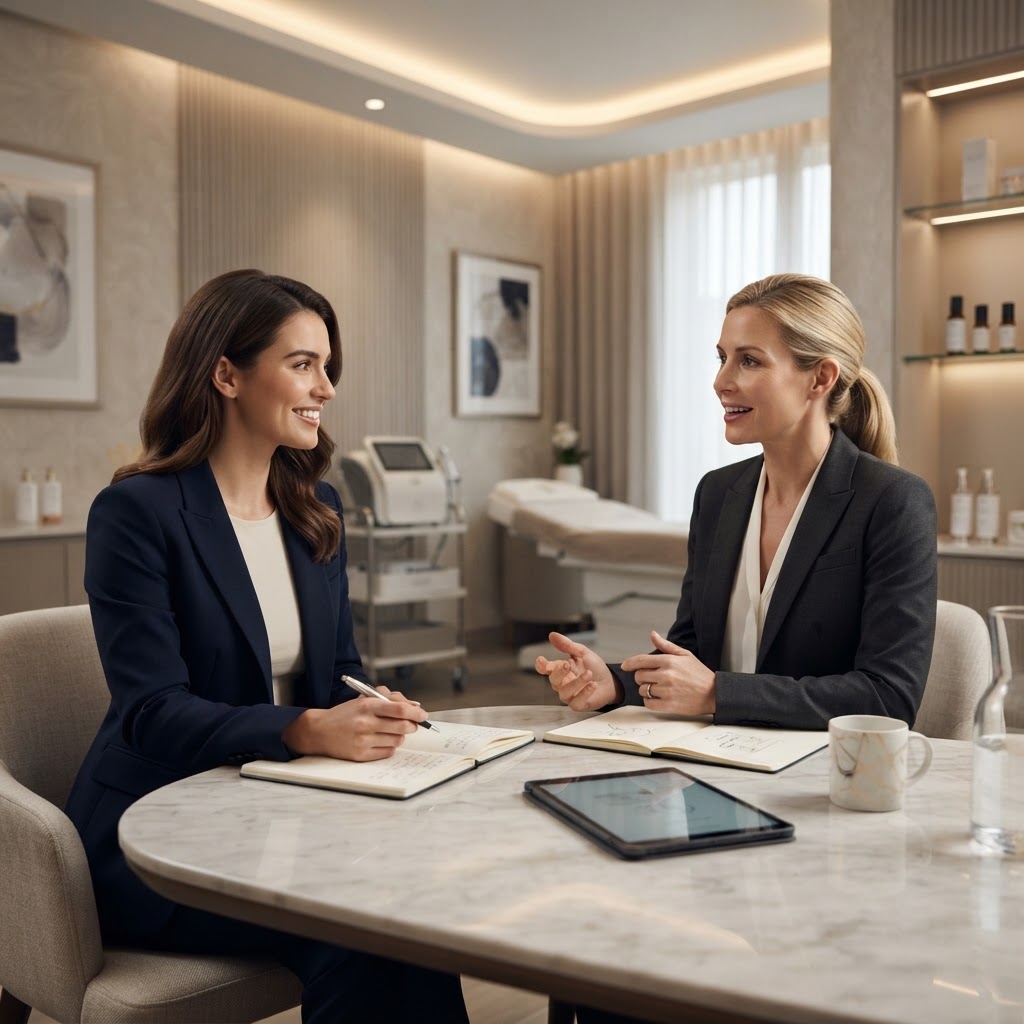
Aesthetic Career Paths Beyond the Treatment Room
Many medspa professionals want growth beyond hands-on treatment. This guide explores ethical, high-value aesthetic career paths in sales, consultation, operations, and training.

The aesthetics industry offers far more than clinical treatment roles. For professionals who love patient experience, business growth, and education, there are strong aesthetic career paths beyond the treatment room that can be both financially rewarding and professionally fulfilling. In modern medspas and aesthetic practices, success depends on more than excellent treatments. It also depends on consultation quality, patient communication, sales process, follow-up, operations, and team development.
If you are exploring your next move in aesthetics, this is an important shift to understand. The industry increasingly values professionals who can connect patient needs with ethical recommendations, support retention, and contribute to sustainable practice growth. Resources like the Aesthetic Sales Institute homepage and the latest articles on the blog can help you see how these roles fit into the bigger picture of modern medspa success.
Why This Topic Matters
Many talented professionals assume career advancement in aesthetics means only one thing: treating more patients, adding more devices, or increasing clinical complexity. While that path works for some, it is not the only route to growth.
There are several reasons this topic matters now:
Medspas need stronger non-clinical talent
As practices become more sophisticated, they need professionals who can guide consultations, improve conversion, support treatment plan acceptance, and create a more polished patient journey.
Burnout can happen in treatment-heavy roles
Some providers enjoy aesthetics but want a role with less physical demand, more strategic responsibility, or a clearer business focus. Exploring non-treatment roles can help talented people stay in the industry they love.
Revenue growth is tied to communication, not just treatment skill
A medspa can offer excellent services and still underperform if consultations are inconsistent, follow-up is weak, or patients do not understand the value of a treatment plan. That gap creates opportunity for skilled professionals outside the treatment room.
Ethical sales careers are becoming more respected
The word sales can feel uncomfortable in healthcare-adjacent settings, but in aesthetics, ethical sales means helping patients make informed decisions, not pressuring them. Strong communicators who understand this difference can become highly valuable team members.
1. High-Value Career Paths Beyond the Treatment Room
There is no single track, but several roles stand out for professionals interested in growth beyond hands-on treatment.
Aesthetic consultant or patient coordinator
This role often sits at the center of the patient journey. Aesthetic consultants help educate prospective patients, guide consultations, explain treatment plans, discuss pricing, and support next steps.
Strong consultants combine warmth, organization, and business awareness. They understand how to build trust, ask thoughtful questions, and align recommendations with patient goals and provider guidance.
This is one of the most accessible aesthetic career paths for professionals who are personable, detail-oriented, and motivated by both service and results.
Practice sales and revenue growth roles
Some medspas and aesthetic brands need team members focused on sales process, lead management, conversion performance, membership growth, and retention strategy. These roles may include titles such as sales manager, practice development coordinator, or business development lead.
In these positions, your value comes from creating structure. That may include tracking inquiries, improving consultation flow, measuring close rates, or coaching the front-end team on follow-up.
Training and education roles
Experienced aesthetic professionals often transition into internal training, onboarding, or education support. In a medspa setting, this can mean helping new coordinators learn consultation standards, patient communication, service knowledge, and workflow expectations.
For those who enjoy mentoring, this is a strong option. It combines industry knowledge with professional development and can influence the performance of the entire team.
Operations and patient experience leadership
Operations roles are ideal for professionals who think in systems. These leaders focus on scheduling efficiency, handoffs between departments, front desk excellence, workflow consistency, and service standards.
A polished patient experience is a growth function, not just an administrative one. Patients are more likely to trust recommendations and return when the practice feels organized, attentive, and premium at every touchpoint.
2. Transferable Skills That Make These Roles a Strong Fit
Many people already have the foundational skills for non-clinical growth, even if they have not framed them that way yet.
Communication and trust-building
Whether you come from front desk, clinical support, retail, hospitality, or patient care, the ability to make people feel heard is essential. In aesthetics, trust is often built before treatment ever begins.
Consultation confidence
You do not need to be aggressive to succeed in a sales-oriented role. You need to be clear, informed, and comfortable discussing goals, options, and next steps. Ethical consultation is one of the most valuable skills in the medspa industry.
Organization and follow-through
Leads are often lost through poor follow-up, inconsistent note-taking, or unclear ownership. Professionals who are reliable, process-driven, and accountable often thrive in growth-focused roles.
Commercial awareness
Understanding how a practice grows matters. This includes knowing the importance of average ticket value, retention, treatment plan acceptance, and long-term patient relationships. If you naturally think about both service and business performance, you may be well suited for one of these career paths.
3. What a Successful Transition Can Look Like
The best career moves are usually intentional, not accidental. Here are a few practical examples of how transitions can happen.
Example 1: From front desk to consultation support
A front desk professional notices they are especially strong at handling inquiries, calming nervous patients, and helping people feel comfortable. Over time, they begin assisting with consultation preparation, treatment plan handoff, and follow-up outreach. With training, they move into a dedicated patient coordinator role.
Example 2: From provider support to sales leadership
A clinical assistant understands services well, listens carefully during consultations, and notices where communication breaks down. They begin contributing ideas on patient education and rebooking. Eventually, they step into a role focused on conversion improvement and team coaching.
Example 3: From experienced consultant to trainer
A high-performing consultant develops strong systems for discovery, documentation, and treatment plan communication. As the practice grows, leadership asks them to train new hires and standardize the consultation process. This becomes a natural move into education and training.
These examples show an important truth: many aesthetic career paths open when you combine patient-centered communication with business discipline.
4. Common Mistakes When Exploring Aesthetic Career Paths
Making a move beyond the treatment room can be exciting, but it also comes with avoidable missteps.
Mistaking sales for pressure
Ethical sales is not about pushing treatments. It is about understanding goals, educating clearly, and helping patients make informed decisions. Professionals who avoid sales entirely because of outdated assumptions may overlook excellent opportunities.
Focusing only on passion, not performance
Loving aesthetics is important, but hiring managers also look for measurable impact. Be ready to speak about retention, rebooking, lead response, consultation quality, or workflow improvements, not just enthusiasm.
Underestimating the need for training
Strong interpersonal skills matter, but they are not enough on their own. Successful consultants and growth leaders need structured training in communication, objection handling, service presentation, and ethical closing.
If you are serious about advancement, invest time in industry-specific education through trusted resources like the Aesthetic Sales Institute training platform.
Ignoring cultural fit
Not every medspa values process, professionalism, or ethical standards equally. A career move is not just about title. It is also about joining an environment where patient experience and team development are taken seriously.
5. Action Steps to Build Your Next Move
If you are ready to explore career growth outside the treatment room, focus on practical momentum.
1. Audit your current strengths
List the skills you already use that relate to consultation, follow-up, communication, or revenue support. Be specific. Examples include converting inquiries, educating patients, managing schedules efficiently, or improving rebooking consistency.
2. Learn the business side of aesthetics
Study how medspas grow. Learn the basics of lead management, consultation flow, treatment plan presentation, retention strategy, and patient communication. The more fluent you become in practice performance, the more valuable you are.
3. Build evidence of impact
Track examples of your contribution. Did you improve show rates, support package sales, increase membership sign-ups, or help streamline front-end communication? Quantifiable results strengthen your next application or internal promotion conversation.
4. Seek role-specific training
Targeted education can help bridge the gap between potential and readiness. Review educational resources, practice communication frameworks, and stay current with industry trends through the Aesthetic Sales Institute blog.
5. Position yourself professionally
Update your resume, LinkedIn profile, and interview language to reflect outcomes, not just tasks. Instead of saying you assisted patients, explain how you improved the patient journey, supported consultation flow, or contributed to retention.
Final Thoughts
The aesthetics industry needs more professionals who understand both people and performance. That includes consultants, patient coordinators, trainers, sales leaders, and operations professionals who can elevate the medspa experience without ever stepping into a treatment role.
For the right person, these aesthetic career paths offer a meaningful way to grow, stay connected to the industry, and contribute at a higher level. The key is to approach the transition with professionalism, ethical standards, and a commitment to skill development.
If you want to build a stronger future in aesthetic sales and medspa growth, join the Aesthetic Sales Institute prelaunch list and get 20% off at launch. It is the best way to stay informed, access premium training, and prepare for your next career move with confidence.