How to Move From Esthetician to Aesthetic Sales
Moving from esthetician to aesthetic sales is a natural career path for professionals who understand treatment value and patient experience. This guide explains what transfers, what to learn next, and how to make the shift ethically and strategically.
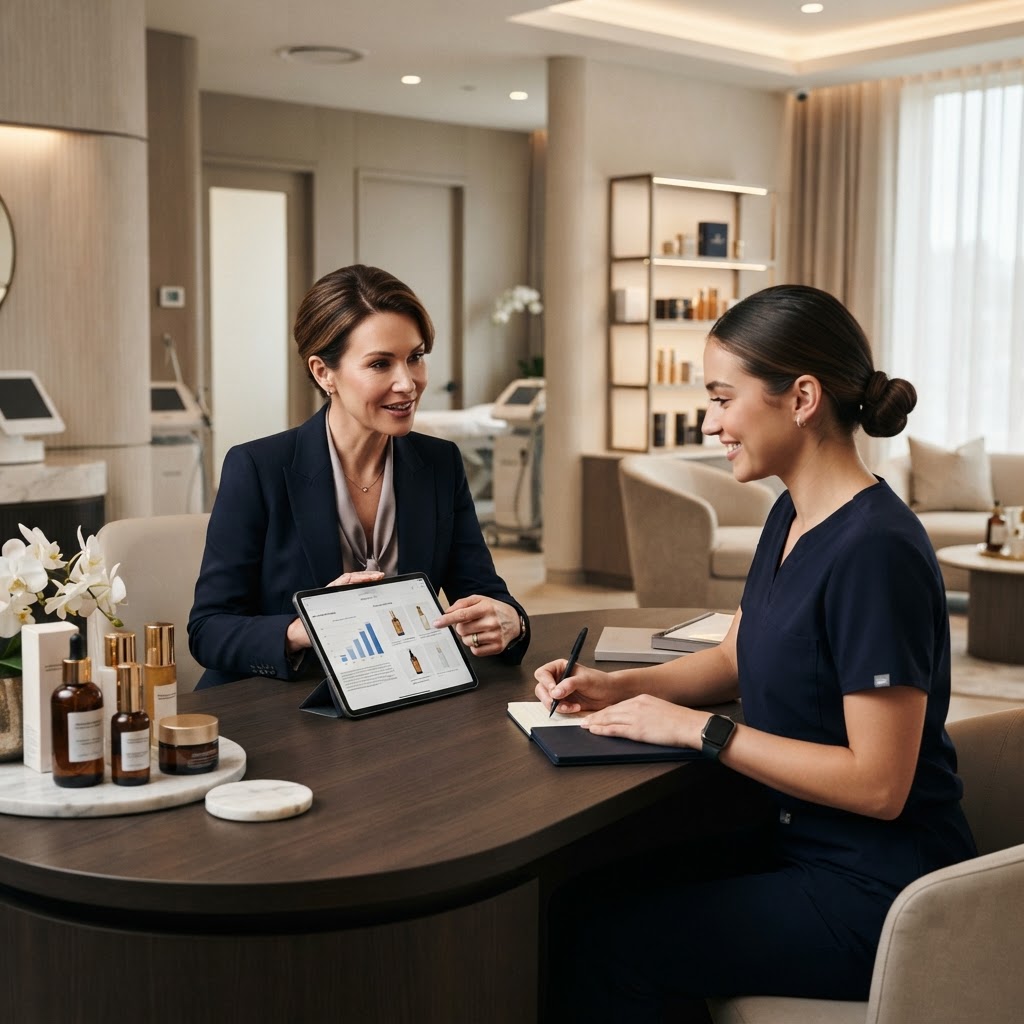
If you are exploring the move from esthetician to aesthetic sales, you are not starting over. You are building on a foundation that already includes patient interaction, treatment knowledge, trust building, and service excellence. In a medspa or aesthetic practice, those strengths can translate well into consultation support, treatment plan communication, retail strategy, membership growth, and revenue-focused patient education. The key is learning how to shift from hands-on delivery to ethical, structured sales communication.
For professionals who want to grow beyond the treatment room, this transition can open a new lane in the medical aesthetics industry. It can also create more influence on patient experience, team performance, and business growth. If you are new to the career path, start by exploring the Aesthetic Sales Institute homepage and reviewing more industry guidance on the blog.
Why This Career Shift Matters
The aesthetics industry has become more sophisticated. Patients are not simply buying a facial or a single service. They are making decisions about treatment plans, maintenance schedules, memberships, skincare, financing, and overall confidence in a provider. That means practices need team members who can communicate value clearly, ethically, and consistently.
Estheticians are often well positioned for this role because they already understand the patient mindset. They know what questions patients ask, where hesitation shows up, and how treatment outcomes are connected to compliance and trust. In many medspas, the gap is not product knowledge alone. The gap is communication.
Moving into aesthetic sales matters because it helps bridge the space between clinical recommendation and patient commitment. When done well, it improves the patient journey while supporting healthy practice growth.
What Transfers From the Treatment Room
The transition from esthetician to aesthetic sales is easier when you recognize what you already bring to the table.
Patient trust and rapport
Estheticians are trained to read tone, body language, and comfort level. In sales, that matters. Patients are more likely to move forward when they feel heard, respected, and educated, not pushed.
Treatment literacy
You may not be acting as the clinical decision maker, but your understanding of common services, skincare protocols, and maintenance needs is valuable. It helps you explain treatment pathways in language patients can understand.
Service standards
Strong estheticians know that details matter. Follow-up, presentation, environment, timing, and consistency all influence the patient experience. These same factors are central to successful consultation processes.
Retail and home care communication
If you have ever recommended products, explained regimen compliance, or connected home care to outcomes, you already have a sales foundation. Aesthetic sales simply expands that skill into a more structured process.
What Aesthetic Sales Actually Looks Like
Many professionals assume aesthetic sales is just about selling packages. In reality, strong performance usually comes from patient education, process discipline, and alignment with the provider’s recommendations.
Consultation support
Depending on the practice, aesthetic sales may involve greeting consult patients, identifying goals, discussing concerns, outlining options approved by the provider, and helping the patient understand next steps.
Treatment plan communication
This often includes reviewing timing, investment, sequencing, skincare support, pre and post treatment expectations, and membership or package structures. The role is not about pressure. It is about clarity.
Revenue-driving patient experience
Aesthetic sales professionals help reduce confusion, missed opportunities, and drop-off after consultations. They support conversion by making the path feel organized and manageable.
Follow-up and retention
A large part of the job happens after the initial conversation. Follow-up texts, calls, email touchpoints, rebooking support, and ongoing skincare conversations all contribute to patient retention and lifetime value.
If you want a broader view of how these responsibilities fit into medspa growth, review the educational resources available on the latest insights section.
Skills You Need to Build Next
To move successfully from esthetician to aesthetic sales, you need more than treatment knowledge. You need commercial communication skills.
Consultative communication
This means asking better questions, listening for motivation, and tailoring the conversation to the patient’s goals. Instead of listing services, you learn to guide a conversation that helps the patient make an informed decision.
Useful questions might include:
- What brought you in now?
- What outcome matters most to you?
- Have you tried anything for this concern before?
- What would make you feel confident moving forward?
Objection handling
Patients often hesitate because of timing, budget, uncertainty, or fear of making the wrong decision. A skilled aesthetic sales professional does not argue. They clarify.
For example, if a patient says, "I need to think about it," a better response is not pressure. It may be, "Absolutely. What part would be most helpful to review so you can make the right decision for yourself?"
Financial fluency
You should be comfortable discussing packages, memberships, retail bundles, financing options if offered by the practice, and the difference between a one-time service and a long-term plan. This must always be handled ethically and transparently.
CRM and process discipline
Top performers document interactions, track follow-up, understand lead sources, and monitor conversion patterns. In a modern medspa, sales is not just personality. It is repeatable process.
Practical Examples of the Transition
Here are a few realistic ways an esthetician might step into aesthetic sales.
Example 1: From treatment provider to consultation coordinator
An esthetician who has spent years performing facials may begin supporting skin consults by helping patients understand treatment sequencing, product pairing, and maintenance plans. Because the esthetician already understands skin concerns and patient questions, they can become a strong consultation partner with training.
Example 2: From spa retail to medspa sales support
A professional with high skincare retail performance may transition into a role focused on packages, memberships, and treatment plan follow-up. Their retail background gives them confidence in value communication, while additional education helps them handle more complex aesthetic conversations.
Example 3: From front-end patient care to growth role
Some estheticians move out of service delivery because they want a schedule with less physical demand. In aesthetic sales, they can still stay close to patient transformation and contribute meaningfully to practice growth through conversion, retention, and communication excellence.
Common Mistakes to Avoid
The move from esthetician to aesthetic sales can stall when professionals rely too heavily on instinct and not enough on structure.
Talking too much about treatments
Patients care about outcomes, concerns, and confidence. If you lead with technical details before understanding their goals, the conversation can feel overwhelming.
Sounding transactional
A premium medspa experience should feel personalized. If every patient hears the same script without genuine listening, trust drops quickly.
Blurring the line between education and pressure
Ethical sales is not passive, but it is also not aggressive. Your role is to help patients understand options clearly and choose what aligns with their goals and provider guidance.
Ignoring follow-up
Many opportunities are lost because no one follows up with consistency. A thoughtful follow-up process often matters as much as the initial consult.
Assuming product knowledge is enough
Knowing treatments is helpful, but it is not the same as knowing how to guide decision making, handle objections, and move patients toward commitment in a professional way.
Action Steps to Move From Esthetician to Aesthetic Sales
If you are serious about making the transition, take these steps.
1. Audit your transferable skills
Write down where you already excel: patient rapport, retail recommendations, treatment education, rebooking, or service upgrades. This helps you position your background with confidence.
2. Learn sales language for a medspa setting
Study consultation flow, objection handling, package presentation, and follow-up strategy. Focus on language that is polished, respectful, and patient-centered.
3. Understand the business side
Start learning key metrics such as consultation conversion, average ticket value, retention, membership utilization, retail attachment rate, and rebooking percentage. These are often the numbers that matter in an aesthetic sales role.
4. Practice with real scenarios
Role-play common consult situations. Practice how you would respond to budget concerns, indecision, spouse objections, or patients comparing multiple providers.
5. Rework your resume and positioning
Do not present yourself only as a treatment provider. Highlight revenue contribution, retail performance, patient retention, consultation support, and communication strengths.
6. Seek industry-specific training
General sales education can help, but aesthetic sales has its own language, workflows, and ethical standards. Specialized training can shorten the learning curve and help you present yourself as career ready.
Build a Premium Career Path With Intention
The path from esthetician to aesthetic sales is not about leaving patient care behind. It is about applying your experience in a new way, one that supports better communication, stronger treatment plan follow-through, and a more elevated patient journey.
For many professionals, this shift creates an opportunity to grow into a more strategic role within the aesthetics industry. With the right training, you can become more than someone who understands treatments. You can become someone who helps practices communicate value with clarity and integrity.
If you want to be first in line for specialized training, join the Aesthetic Sales Institute prelaunch list and get 20% off at launch. It is the best way to stay informed and prepare for your next step in aesthetic sales.