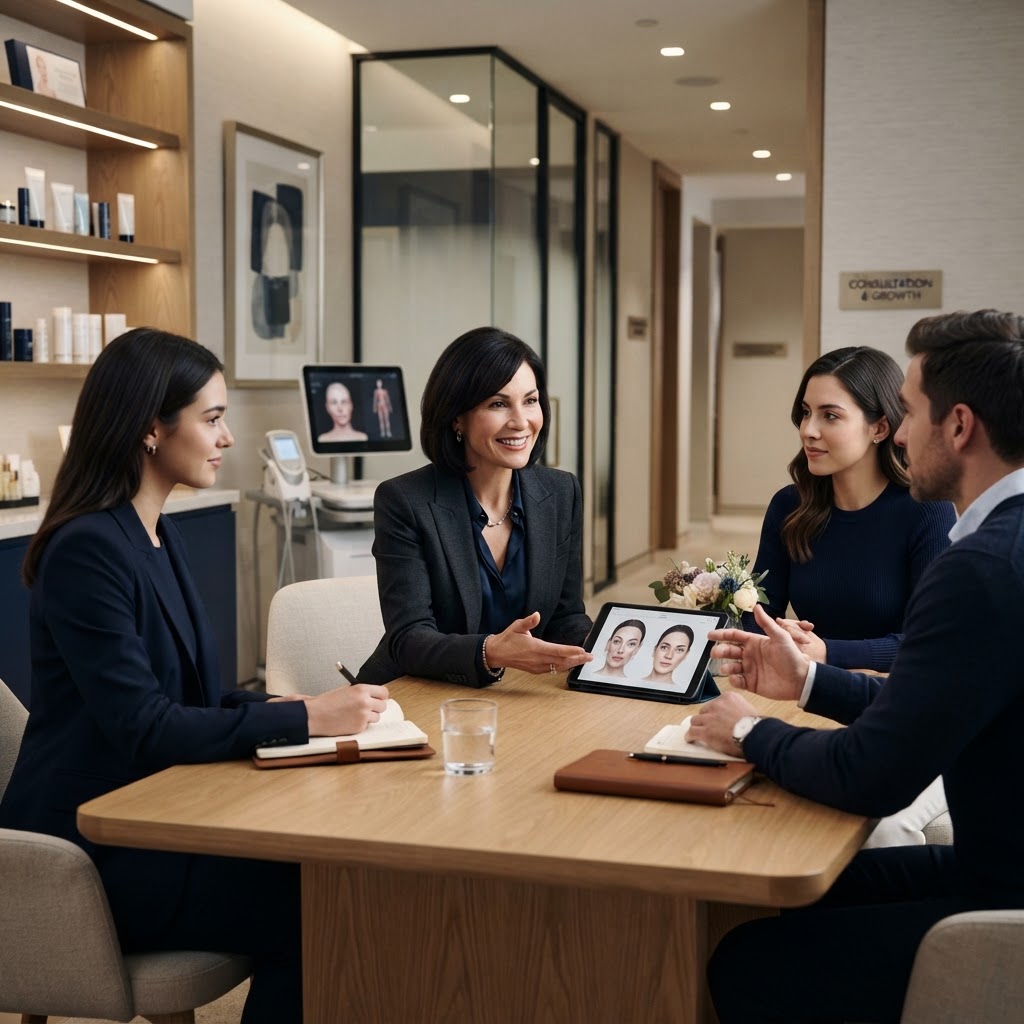
Front Desk Sales Training for Medspa Growth
Strong front desk sales training helps aesthetic practices improve patient experience, booking quality, and team consistency. Here is how medspa leaders can train coordinators to communicate with confidence and integrity.

For aesthetic practices, the front desk is not just an administrative station. It is the first live touchpoint for patient trust, brand perception, and revenue opportunity. Many owners looking for front desk sales training medspa teams will actually use are trying to solve the same challenge: how to help coordinators communicate with warmth, clarity, and confidence without sounding scripted or pushy. In a premium environment, the front desk should support both hospitality and healthy business performance.
When front desk team members are trained well, they do more than answer phones and confirm appointments. They help set expectations, guide next steps, reduce friction, and support ethical conversion. This is why practices that invest in structured training often create a smoother patient journey from first inquiry to arrival, consultation, treatment planning, and rebooking. For more insight into premium sales education, explore the Aesthetic Sales Institute.
Why Front Desk Sales Training Matters
In medspas and aesthetic practices, patients often make decisions based on emotion, trust, timing, and perceived professionalism. Before they ever meet a provider, they are forming opinions through a phone call, text exchange, online inquiry response, or welcome at check in. If the front desk sounds rushed, transactional, or unclear, the patient experience can lose momentum early.
Training matters because front desk performance directly affects:
- lead response quality
- consultation booking rates
- show rates
- patient confidence
- handoff to clinical and sales team members
- rebooking and retention
Without training, many coordinators rely on personality alone. Personality helps, but it does not replace a repeatable communication framework. In a premium setting, patients expect polished service, accurate information, and thoughtful guidance. Strong training helps teams deliver that experience consistently.
Build a Service Driven First Impression
Train beyond scheduling tasks
A common mistake is treating the front desk as purely operational. In reality, the role combines hospitality, communication, and sales support. Training should help coordinators understand that every interaction shapes patient perception.
This starts with a simple mindset shift: the goal is not just to book a slot on the calendar. The goal is to make the next best step feel easy, relevant, and comfortable for the patient.
Teach front desk team members to focus on:
- tone of voice and pace
- active listening
- confident explanation of next steps
- accurate but concise service descriptions
- premium hospitality from the first greeting
Create consistency across phone, text, and in person
Patients move between channels quickly. A lead may discover the practice on social media, submit a form online, ask a question by text, and call later to book. If responses vary by team member or channel, trust can drop.
Front desk training should include standards for:
- how quickly inquiries are answered
- how new patient questions are acknowledged
- how consultation options are explained
- how pricing conversations are handled appropriately
- how follow up is documented
Consistency does not mean robotic language. It means the same level of professionalism, empathy, and clarity at every touchpoint.
Train for Discovery, Not Pressure
Ask better questions
High performing front desk coordinators do not jump straight into quoting prices or listing every service. They know how to guide a brief discovery conversation. This helps the patient feel heard and allows the practice to recommend the right next step.
Examples of helpful discovery questions include:
- What are you hoping to improve or learn more about?
- Is this your first aesthetic treatment, or have you had services before?
- Are you looking for a consultation first, or do you already know which service interests you?
- What timing are you hoping for?
These questions are simple, but they shift the interaction from transaction to guidance.
Teach ethical language around value
In aesthetic sales, ethical communication matters. Front desk team members should never overpromise outcomes, give clinical advice beyond their role, or pressure patients into booking. Instead, training should focus on value based communication.
That means helping coordinators explain:
- what a consultation includes
- why an in person assessment may be helpful
- how the practice approaches individualized treatment planning
- what the patient can expect in the scheduling process
This creates confidence without crossing professional boundaries.
Create a Strong Booking and Follow Up System
Standardize the path from inquiry to appointment
Even excellent communication can break down if the booking process is unclear. Front desk training should map the ideal process from first contact through confirmed arrival.
A reliable booking system usually includes:
- Prompt response to inquiry
- Brief discovery conversation
- Clear recommendation for consultation or service type, when appropriate to role
- Confident invitation to book
- Confirmation of date, time, and preparation details
- Follow up reminders and documentation in the system
When this process is standardized, coordinators are less likely to miss opportunities or leave patients uncertain.
Use scripts as support, not a crutch
Scripts can be useful when they are designed as frameworks. A front desk coordinator should not sound memorized. They should sound prepared.
A strong script framework includes:
- a warm opening
- two or three discovery questions
- a concise explanation of next steps
- a clear booking invitation
- a graceful response to hesitation
For example, instead of saying, “Do you want to book?” a more effective version might be, “Based on what you shared, the best next step would be a consultation so we can tailor recommendations to your goals. We have availability this week and next. Which works better for you?”
Align the Front Desk With the Full Patient Journey
Improve handoffs between teams
Front desk sales training is most effective when it is not isolated from the rest of the practice. Coordinators need visibility into how consultations are conducted, how treatment plans are presented, and how follow up supports long term retention.
This alignment helps prevent common disconnects, such as:
- a front desk team member booking the wrong appointment type
- unclear notes for the provider or consultant
- inconsistent messaging about pricing or packages
- missed rebooking opportunities after treatment
Regular communication between front desk staff, consultants, providers, and leadership creates a more seamless patient experience.
Measure the right performance indicators
Training improves faster when leaders track practical metrics. For front desk team members, useful indicators may include:
- inquiry response time
- consultation booking rate
- lead to appointment conversion
- show rate
- rebooking rate
- quality of notes and follow up completion
Metrics should be used for coaching, not pressure. The goal is to identify where support, clarity, or process improvement is needed.
Practical Examples in a Medspa Setting
Consider these common situations:
Example 1: The price shopper
A caller asks, “How much is Botox?” An untrained response may end the conversation with a quick number. A trained response acknowledges the question, gives appropriate general guidance, and moves toward consultation or booking: “Pricing can vary based on your goals and the provider recommendation. I can share our starting range, and the best next step is to schedule a visit so your plan is tailored properly.”
Example 2: The nervous first timer
A new patient says they are unsure where to start. A trained coordinator slows the pace, reassures the patient, and explains the consultation process clearly. The interaction feels welcoming, not sales driven.
Example 3: The missed follow up opportunity
A lead inquires online but does not book immediately. A strong front desk process includes timely follow up, thoughtful messaging, and documentation so the conversation does not disappear.
For more ideas on training systems and communication strategy, browse the resource library.
Common Mistakes to Avoid
Even talented teams can underperform when training is informal or inconsistent. Watch for these issues:
- relying on front desk staff to “figure it out” without a process
- overloading coordinators with information instead of teaching clear frameworks
- focusing only on scheduling accuracy and ignoring communication skill
- allowing inconsistent responses to pricing questions
- skipping role play and live coaching
- failing to review recorded calls or inquiry handling patterns, where appropriate and compliant
Another common mistake is treating sales as separate from service. In a premium medspa, the best sales support feels like guidance, hospitality, and professionalism.
Action Steps for Practice Leaders
If you want stronger front desk performance, start with a focused training plan:
- Audit your current patient inquiry experience across phone, text, and online forms.
- Define the ideal front desk workflow from first contact to confirmed appointment.
- Create script frameworks for greetings, discovery questions, booking invitations, and follow up.
- Train on ethical communication boundaries, especially around pricing and treatment questions.
- Role play common scenarios weekly.
- Track conversion and show rate data for coaching opportunities.
- Align front desk messaging with providers, consultants, and leadership.
Consistent training usually outperforms one time instruction. The most effective teams practice, review, refine, and repeat. You can also explore more practical guidance in the latest insights on our blog.
Final Thoughts
Front desk excellence is a growth strategy for aesthetic practices. When coordinators are trained to combine hospitality, discovery, booking skill, and ethical communication, they help create a patient experience that feels premium from the very first interaction. That kind of consistency supports trust, team confidence, and stronger business fundamentals.
If you want to build a more polished, confident, and conversion minded front desk team, join the Aesthetic Sales Institute prelaunch list and get 20% off at launch. Visit the Aesthetic Sales Institute homepage to stay informed.