How to Increase Consult Bookings From Front Desk Calls
Front desk phone calls often determine whether a prospective patient books or disappears. Learn how medspa teams can improve call handling, build trust, and convert more inquiries into consults.
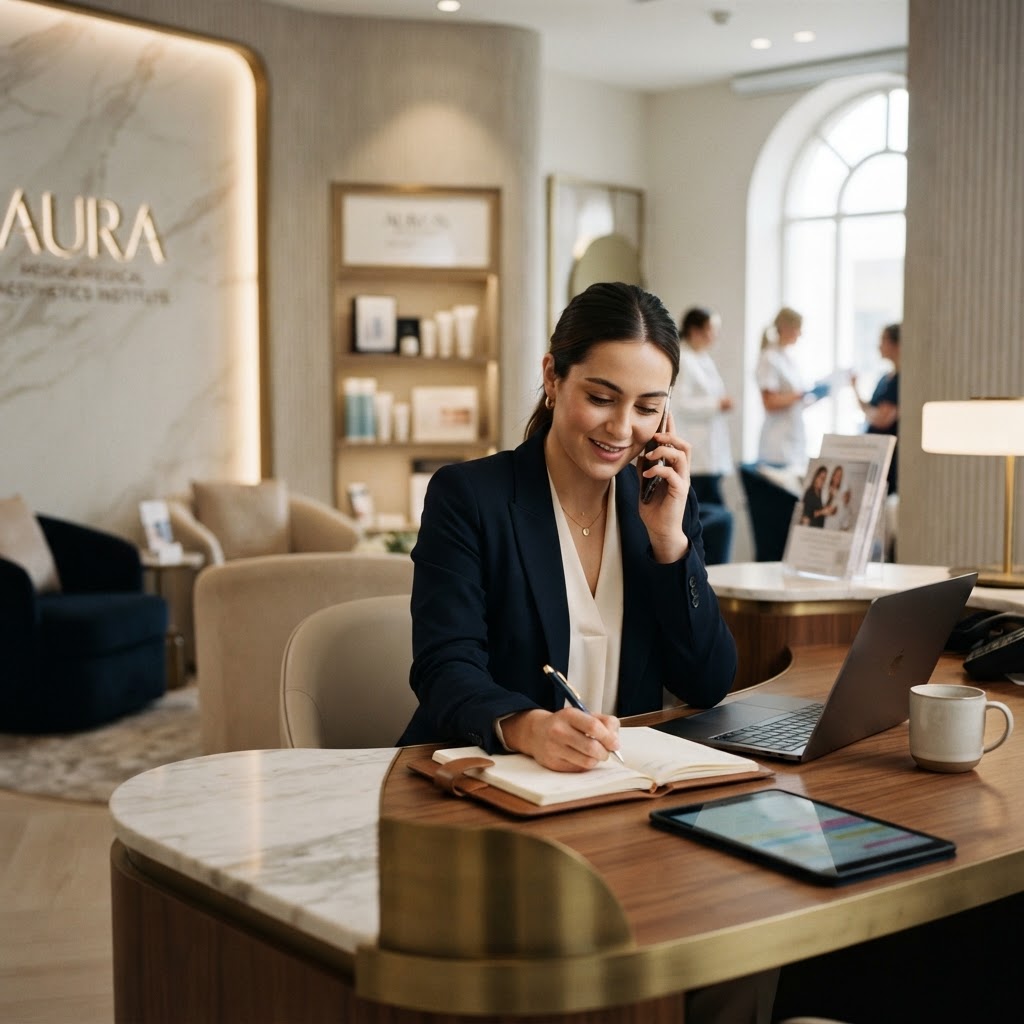
Every front desk call is a live sales opportunity, especially in aesthetics, where trust, clarity, and confidence shape the patient journey from the first interaction. If your goal is to increase consult bookings front desk teams need more than a friendly tone. They need a clear process for guiding inquiries into well-matched consultations without sounding scripted or pushy.
In a medspa or aesthetic practice, the phone is often the first real human touchpoint. The way a coordinator answers questions, uncovers motivation, explains next steps, and offers scheduling options can directly influence whether a caller books now, shops around, or disappears. Strong call handling is not about pressure. It is about patient-centered communication, consistent training, and a structured booking process.
For practices looking to strengthen this skill set, the Aesthetic Sales Institute and the latest insights on the training blog can help teams build a more refined, ethical approach to front desk performance.
Why Front Desk Call Performance Matters
Aesthetic patients rarely call with perfect clarity. Many are curious, cautious, price-sensitive, or still comparing providers. They may ask about cost, downtime, timing, candidacy, or the difference between treatments. If the front desk responds with vague answers, rushed conversations, or a simple, "You need to come in for a consult," the caller may feel dismissed.
High-performing teams understand that the purpose of the call is not to give a full treatment plan. It is to create enough confidence and connection for the patient to take the next step.
When front desk teams improve phone performance, practices often benefit from:
- More consultations scheduled from inbound inquiries
- Better-qualified consults that arrive informed and prepared
- Stronger first impressions and brand consistency
- Fewer missed opportunities from price-only conversations
- Better alignment between marketing spend and actual booked appointments
In a premium aesthetic environment, the patient experience begins before the patient walks through the door. The quality of the phone conversation sets the tone.
Build a Clear Call Flow for Every Inquiry
One of the fastest ways to improve booking consistency is to standardize the structure of the conversation. A strong call flow helps new and experienced coordinators stay confident while keeping the interaction natural.
Start with warmth and professionalism
The opening should sound polished, calm, and attentive. A rushed or distracted greeting immediately lowers trust.
A better opening might sound like:
"Thank you for calling. I would be happy to help. What treatment or concern are you calling about today?"
This invites the caller to share context, rather than forcing the conversation into a narrow script.
Identify the caller's goal
Before discussing scheduling, the coordinator should understand what the caller wants. Are they interested in injectables, body contouring, skin rejuvenation, acne scarring, or overall facial balancing? Are they new to aesthetics or experienced?
Helpful discovery questions include:
- "What are you hoping to improve?"
- "Have you had this type of treatment before?"
- "Are you looking for something soon, or just starting your research?"
These questions help the coordinator tailor the next steps and avoid generic responses.
Position the consultation as valuable
Many practices lose bookings because they treat the consult like an administrative requirement instead of a meaningful experience. The consult should be framed as the best next step for personalized guidance.
For example:
"The consultation gives you dedicated time with our team to review your goals, assess the right options, and create a plan that fits what you are looking for."
That language reinforces expertise and value without making promises.
Train Coordinators to Handle Price Questions Ethically
Price questions are among the most common barriers to booking. If a coordinator responds too vaguely, the caller may become frustrated. If they respond too specifically without context, the caller may reduce the decision to cost alone.
Acknowledge the question directly
Avoid dodging price questions. Patients appreciate transparency, even when exact pricing depends on assessment.
A balanced response might be:
"Pricing can vary based on the area treated and the plan that best fits your goals, but I can give you a starting range and explain what the consultation would cover."
This keeps the conversation open while maintaining accuracy.
Connect price to value and fit
In aesthetics, the patient is not just purchasing a treatment. They are choosing expertise, safety standards, results planning, and experience. The front desk should know how to speak about value in a refined, non-defensive way.
For example:
"Our consultation is designed to make sure you are matched with the right treatment and provider recommendation, so you can move forward with clarity."
Move the caller toward a decision
After discussing general pricing, the coordinator should transition smoothly into scheduling.
"Based on what you shared, I would recommend booking a consultation so we can give you a personalized recommendation. We have availability this week and next week. Which is better for you?"
That final question matters. It moves the call from information gathering to action.
Improve Scheduling Precision at the End of the Call
Many front desk teams do a good job explaining treatments but fail at the booking close. The end of the call should be direct, easy, and specific.
Offer two scheduling options
Open-ended language such as "Call us back when you're ready" leads to lost opportunities. Instead, guide the patient toward a decision.
Use choices like:
- "Would afternoon or evening work better for you?"
- "I have Thursday at 3:00 or Friday at 11:00, which do you prefer?"
This reduces friction and makes booking feel simple.
Confirm next steps clearly
Once the consult is booked, reinforce confidence by reviewing the details:
- Date and time
- Provider or consultation type
- Deposit or policy information, if applicable
- Arrival instructions
- What the patient should expect during the visit
Clear confirmation reduces no-shows and shows professionalism.
Capture leads that do not book today
Not every caller will schedule immediately. That does not mean the opportunity is lost. Front desk teams should have a follow-up process for warm inquiries.
A strong close could be:
"If you are still deciding, I can text or email a few helpful details and follow up with you tomorrow or later this week. What is best for you?"
This protects leads that would otherwise disappear.
Use Coaching, Metrics, and Roleplay to Strengthen Results
If a practice wants to consistently increase consultation volume, training cannot be a one-time script handoff. It should be an active performance system.
Track the right front desk metrics
Useful metrics include:
- Inbound calls answered
- Inquiries converted to consult bookings
- Price-question conversion rate
- No-book follow-up rate
- Consult show rate from phone-booked leads
These numbers help leaders identify where calls break down.
Review real calls for quality
Call reviews often reveal patterns that reporting alone cannot. Teams may sound rushed, skip discovery questions, or fail to ask for the appointment. Regular review creates more awareness and consistency.
Practice with roleplay
Roleplay is especially effective for:
- New patient calls
- Price shoppers
- Nervous first-time aesthetic patients
- Patients comparing multiple treatments
- Callers who say they need to think about it
In premium practices, confidence comes from preparation. The more situations coordinators rehearse, the more naturally they perform on live calls.
Practical Examples of Better Booking Conversations
Example 1: The price-first caller
Caller: "How much is lip filler?"
Weak response: "It depends. You need a consult."
Better response: "Pricing depends on the treatment plan and how much product is appropriate for your goals, but I can share a starting range. If you would like, we can also reserve a consultation so you can get personalized guidance and know exactly what is recommended."
Example 2: The unsure new patient
Caller: "I am not sure what treatment I need. I just want to look more refreshed."
Weak response: "We offer a lot of options. Check the website."
Better response: "That is exactly what a consultation is helpful for. We can learn more about your goals and guide you toward the most appropriate options. Would you prefer to come in later this week or next week?"
Example 3: The caller who wants to think about it
Caller: "Let me think about it and call back."
Weak response: "Okay, no problem."
Better response: "Of course. Before we hang up, would it be helpful if I texted you the consultation details and followed up in a couple of days?"
Common Mistakes That Reduce Consult Bookings
Even high-end practices can lose opportunities through small communication habits.
Talking too much about treatments, not enough about goals
When coordinators jump into technical information too early, the conversation becomes less personal and less persuasive.
Sounding transactional
A patient who feels like a number is less likely to book. Tone, pacing, and curiosity matter.
Failing to ask for the appointment
Many calls end without a direct scheduling invitation. If you do not ask, many callers will not take the next step.
Giving inconsistent information
If every coordinator explains consults, pricing, and next steps differently, conversion becomes unpredictable. Standardization supports trust.
Neglecting follow-up
Some of the best opportunities are not the easy yes calls. They are the warm leads that need one thoughtful follow-up to convert.
Action Steps for Medspa Teams
To improve results quickly, focus on these practical next steps:
- Audit your current call flow from greeting to booking close.
- Create approved language for price questions, consultation value, and follow-up.
- Train coordinators to ask discovery questions before discussing scheduling.
- Require every call to end with a clear invitation to book.
- Implement a same-day or next-day follow-up process for unbooked leads.
- Review call recordings weekly and coach for tone, confidence, and consistency.
- Track conversion rate from inquiry to consult so improvement can be measured.
The goal is not to make every call sound identical. It is to ensure every caller receives a polished, trust-building experience that makes booking feel like the natural next step.
Final Thoughts and Next Step
When medspa teams want to increase consult bookings from front desk calls, success usually comes down to structure, confidence, and patient-centered communication. A strong coordinator knows how to listen well, guide the conversation, handle common questions professionally, and make scheduling easy.
If you want to build a more skilled, conversion-focused, ethical front desk team, join the Aesthetic Sales Institute prelaunch list and get 20% off at launch. It is the best way to stay informed as new premium training resources become available for aesthetic sales professionals and medspa teams.